
Beyond the usual holidays: how Artificial Intelligence can help travel without barriers
COMMENTS
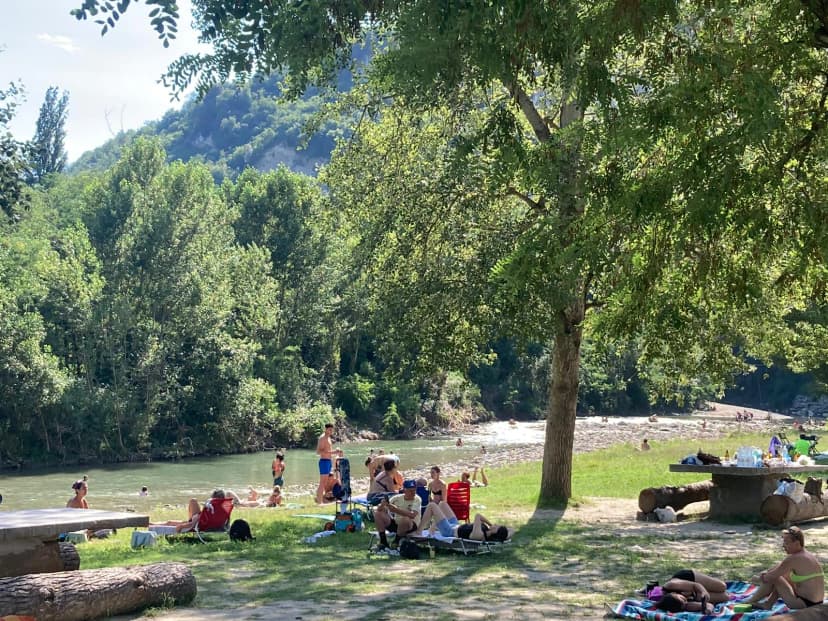
An inclusive oasis on the Santerno River and the challenge of accessible rural tourism.
The small group chats about this and that, sitting in the shade of the trees.
Some cool off in the green waters of the Santerno River.
Every now and then they giggle, some move or lie down to immerse themselves a little more in the cool water.
They are users and workers of a local social cooperative.
With her feet in the water, a trainer sitting on a rock occasionally chimes in on the conversation. A little further away, two elderly women are sitting on deckchairs in the riverbed, soaking up the early morning sun before it gets too hot.
Two families set up a gazebo on the lawn near the riverbank. Their children run to splash in a shallow pool created by a small barrier of rocks across the river.
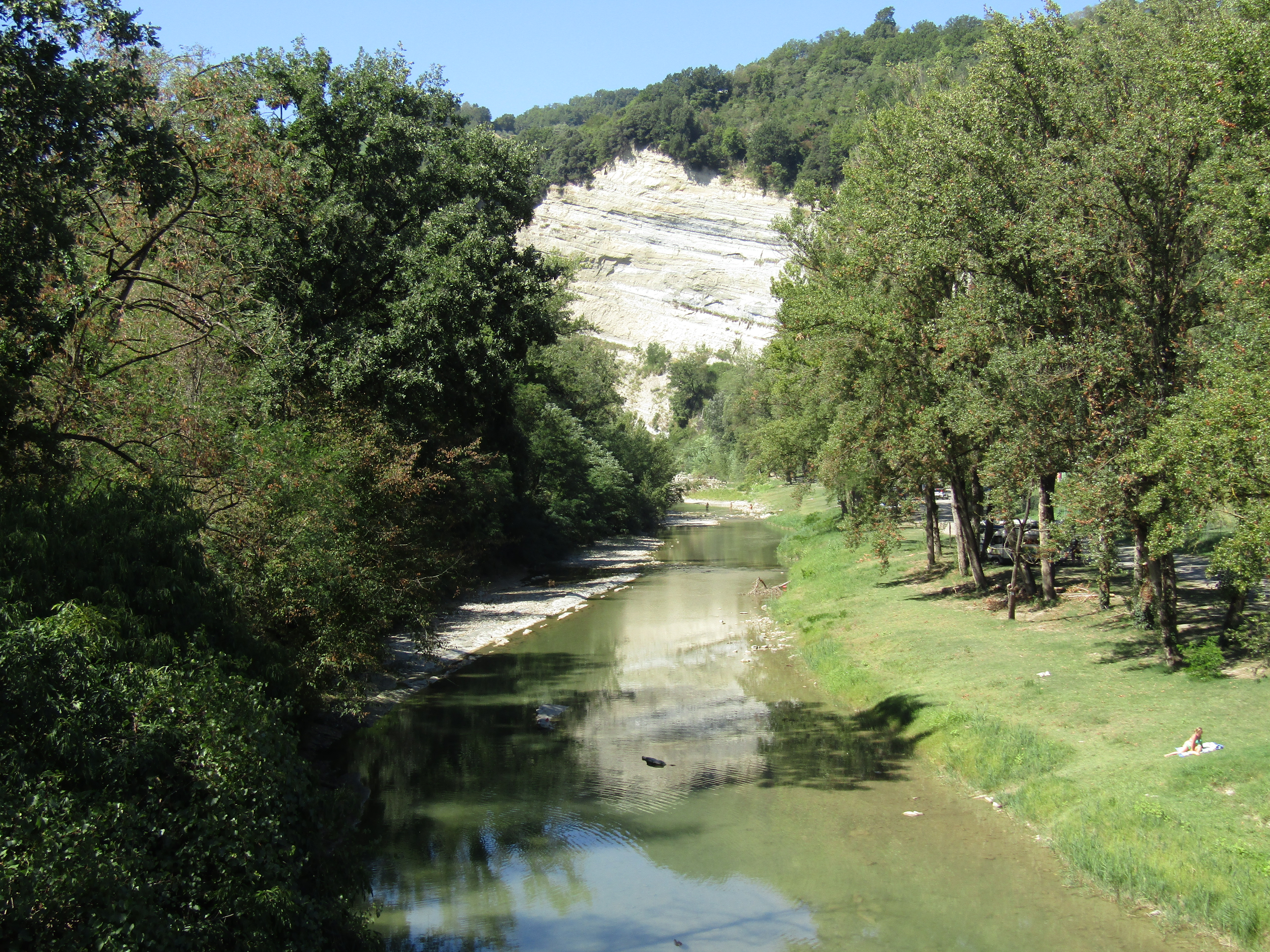
We are in Fontanelice, in the Santerno River Park, in one of the two points indicated by Google's AI Overview as the most accessible for people with disabilities, the elderly, and families.
The second area mentioned is Borgo Tossignano, a little further downstream. Indeed, access to the river is easy in both locations: there's a meadow crisscrossed by paths that lead directly to the water's edge, a water level that allows even small children to enter in any season, as well as ample parking and wheelchair-accessible restrooms.
Accessibility is also evident in terms of affordability, as access to the river park, parking, and use of the restrooms are free.
The residents of the Imola area, which also includes the municipalities of Borgo Tossignano, Fontanelice, and, on the border with Tuscany, Castel del Rio, know their territory well and wouldn't need Gemini to know which points of the river are more or less accessible, nor, for that matter, to read about the beauty of the valley online.
But it's interesting to simulate a search and verify which sources support the answer to the question: "Which beaches are accessible to elderly people on the Santerno River?"
These are, in fact, institutional websites, those of the regional tourism office and the metropolitan city of Bologna (which includes this area), which have been updated for a few months.
Complete and transparent information reduces mental load.
Information, complete, understandable, up-to-date, and easy-to-find, information.
Fundamental when considering the accessibility of places, facilities, and activities that escape the mass circuits and explore more rural and community-based realities.
Here the quality of information becomes fundamental.
Comprehensive information, in a sensitive field like accessibility, doesn't mean having the answers to every possible need or condition, but being clear about the aspects you've already focused on, possibly anticipating user requests.
For a person with reduced mobility, or their caregiver, knowing about the presence of an accessible bathroom, for example, is not enough: as Valeria Gracea and Dario Di Francesco of Cooperativa San Vitale underlined during the DigAccess Training , " it's not about ticking a checklist to see if the bathroom complies with the law, but being able to provide measurements, photos and information that allow you to evaluate these aspects independently."
"For people with special needs and their caregivers," adds Arianna Bassi, a sign language and tactile sign language interpreter, and mentor for the project DigAccess, "what makes the difference, what allows them to say 'this is a real vacation,' is being in a place that shows they've anticipated your accessibility needs before you do. Where they take away the mental burden of having to ask 2,000 questions yourself."
At the same time, it is important to show that you are available and aware that you are on a progressive learning path.
A prominently displayed page on your accommodation's website and a dedicated email address demonstrate your commitment to special needs, even if it will not be possible to accommodate some of them.
Furthermore, comprehensive information not only considers a location and its immediate surroundings, but also considers the route leading to a structure, park, or monument. "Many times," Bassi continues, "people claim their structure is accessible, but then it's impossible to get there, and therefore, in reality, it's not truly accessible."
It cannot be ignored that individual agritourism facilities often have limited investment capacity to adequately respond to special needs. On the other hand, we are witnessing important initiatives by public, private, and associative stakeholders to collect and systematize information on the accessibility of routes and entire geographical areas.
It's worth mentioning ViaLibera!, which is mapping the accessibility of the trails of the famous Via Francigena in Tuscany, or the constantly updated WelcomeEverybody directory of the Emilia-Romagna Tourist Office.
From SEO to GEO: When Clarity Becomes a Marketing Strategy
The fragmentation of this information across a multitude of sites and portals can sometimes pose a barrier. Performing a classic Google search makes it difficult to verify the reliability and up-to-dateness of websites. Until recently, Search Engine Optimization (SEO), the foundation of a site's visibility in search engines, rewarded webmasters' ability to insert the right tags and keywords, but not the quality of the information.
With the advent of AI Overview in search engines, not only has the way users search for information on the internet changed dramatically, but also the way algorithms select relevant information.
From SEO, we have now moved on to GEO, Generative Engine Optimization, based on the algorithmic analysis of entire sentences and paragraphs and not on the mere presence of keywords in a text or its metadata.
In this context, the clearer and more complete the information is, the more likely that the website will be used as a source for the AI's response.
Using accessible language, providing clear, up-to-date, and comprehensive information on the accessibility of facilities, surroundings, and access routes, and including explicit links to online portals and maps are no longer just ethical gestures: they're a marketing strategy.
The large camper parked in the shade of the trees on the banks of the Santerno River, and the large German family emerging from it, including three small children, two dogs, and a cat, remind us how, in the age of AI, clear information in one language is easily accessible even to those who speak other languages: they asked Google where the best place to park was, and judging by everyone's smiles, they're happy with the suggestion.
No comments yet
You must be logged in to leave a comment